Thursday, May 19, 2016

LM-1 Measurement Tools

The designs I present as part of the LM series don't need any of the measurement tools here.  You can buy the parts, cut the holes and solder the crossovers without them.  What I'll be doing with these tools is showing the entire design process so that those who are interested can go on and create their own designs. Much like Dr. Leach did for me in enabling me to think and understand processes that were completely opaque to me before I sat in his class, I hope I can do for a few of you.

In the 21st century the DIY builder has access to buying or downloading tools that only graduate students or professionals in the audio or car industry had in the 1980's. We'll take full advantage of modern tools and while I'll point out some free tools, I'm pretty set in my ways with the inexpensive commercial tools I use. However the steps and processes won't change much regardless of what measurement tools you use.  The primary measurement and analysis tools we'll use are:


You can save $50 by buying OmniMic and DATS together via the Parts Express website. Free alternatives to OmniMic include Room EQ Wizard and others but I'm afraid I don't know much about how to use them. Of course, even if the software is free you'll need a decent microphone. At about $20 the Dayton iMM-6 is pretty much the cheapest there is.

XSim is just an amazingly accurate simulator, allowing you to try alternatives in seconds what before would have taken real hands on experimentation. We'll take the outputs from OmniMic and DATS to analyze our design from start to finish. When we're satisfied then we'll order crossover parts.

Wednesday, May 18, 2016

A Cynical Introduction to Speaker Pricing

Building a well designed kit with good parts is a large cost saving measure. You can have speakers better than commercial speakers costing many times more.  This is particularly true at the top range of the speaker markets.

To understand why a kit will often sound much better, and cost so much less I'd like to use the modest $500 DIY price for the LM-1 kit. In the introduction I mentioned that if you bought them in a store you'd have to pay around $1,500 for similar parts quality. Let's go over the math a little bit. Of course, Ginsu sells knives the same way. "This $3,000 40 piece knife set can be yours for only $19.95" so you have no reason to trust me except that the design for the LM-1 is free. I make no money whether you build a pair of LM-1's or not. So at the very least I lack the financial interests reviewers, manufacturers and salespeople have when comparing them.

So-called High End speakers manufacturers end price speakers based on the cost of the drivers. If you know the speaker's Manufacturer's Suggested Retail Price (MSRP) you can pretty much figure out the driver cost. Of course, in reality it's a closely guarded secret, and brands will add a dot with a Sharpie here and there to claim exclusivity of drivers.

The ratio between MSRP / pair to driver cost for one speaker is between 20:1 and 30:1 in the audiophile market. It may be significantly higher if the manufacturer makes their own drivers like Focal, B&W or Dynaudio do or if it's a feature or lifestyle speaker like Bose. With $5 parts and $1,500 price tags their 5.1 speakers are a manufacturer's dream.

So, let's take the LM-1. Total driver cost is around $65 per speaker. 65 * 20 = $1,300. At 30:1 the price would be $1950. A budget floor standing speaker by a designer the current popular press is raving about, retails for $1,999 a pair. Within our estimation range. Maybe we should compare a pair of the LM-1C's instead, but I don't have as good measurements for those. Let's stick to the LM-1.

To be fair, frequency response of speakers is only the first thing to look at. There are many other factors, especially your ears. However, for a bit let's take flatness as a measure of quality and compare the LM-1 to the Stereophile measurements:


The commercial $1,999 speaker is in Red, the LM-1 in blue.  Mind you the LM-1 data is incomplete in the bass. The effects of the port have not been added in so the true -3 dB point is actually going to be very similar, within 10 Hz or so. The commercial speaker is also about 3dB more efficient than the LM-1. It will need half the power to reach the same volume. Not a bad thing, but also not an overwhelming plus.

Forget the bass though, look at the response above 1 kHz. See that 6 dB bump at around 10-15kHz? Ouch! That has to hurt. By comparison the LM-1 kit produces a very smooth and extended response that slopes downwards at a perfect angle to produce a very neutral and musical in-room response. Of course, this is my personal preferences talking.  My point is, if the speaker reviewed by Stereophile merits a $2,000 price then the LM-1 deserves an even higher price tag. I have heard the speakers Stereophile reviewed by the way, they sound exactly as you would expect that red curve to sound, which in a word was "terrible." I thought the dealer didn't like how I dressed and was deliberately trying to torture me. As bad as the uptilted treble was, the AMT seemed to also suffer from severe compression artifacts, an indicator of a very cheaply made AMT. Good AMT's are amazing.

Interestingly Troels Gravesen makes more good points about commercial speakers and just how bad they really can be despite good reviews here.


Unseen Components

Manufacturers are really under no obligation to factor in high quality parts, so they often don't. They find the cheapest provider of film caps and have them wrap custom plastic around them to appear unique. A couple of rare exception to this is Magico, and Lawrence Audio. 

Sometimes it's the cabinetry itself that's hidden.  It's unbelievable to me that you can paint press board tubes and charge more than $20 for them, which brings us to the next topic in this discussion.


The Value Curve

Over at Part Time Audiophile there's an absolutely great slide with Focal Vice President Gerard Cretchien explaining why the Focal Sopra is his idea of the best speaker in the world. What's most interesting is that from the point of view of a manufacturer, sound quality and performance is only one of many different measurement aspects that need to be optimized. Gerard is doing exactly what he should be doing, creating products with as much perceived value as possible. Good for Focal for having such a dedicated ally who is able to communicate to the dealers so well. As he explains, items such as modernity, technology (perceived advancement), brand recognition, etc. all combine to produce the final "perceived value" equation.  These speakers aren't just music reproduction devices, they are lifestyle emblems, and he knows it.

At the same time that this slide is text-book product development 101, for the inexperienced DIY builder it explains why it is possible for us sawdust covered, wannabe engineers (OK, some of you are real engineers) to build amazing sounding speakers for pennies on the dollar. Focal is charging money for "brand" and "modernity." Imagine if you could get the same quality parts and not have to pay for either. To look at Gerard's chart, each dot is worth about $2,000, so every feature you go "meh" to is another $2,000 less on those $14,000 Sopra's. Do the rest of the math yourself.

Shenanigans

  • The most highly rated speakers at Stereophile follow a particular "Stereophile Curve." Great for those with hearing loss, despite their terrible sound for everyone else. See more here.
  • One famous British company actually makes two identical speaker models but one costs $300/pair more. The only mechanical difference is that a single $1 tweeter capacitor is replaced with an $8 Mundorf caps to make their higher end speakers sound better. In this case, $16 in parts becomes a $300 up sell. 
  • Another equally famous American company buys tweeters for $18 each, puts a custom back on them then puts them into speakers costing over $100,000.  Of course, they argue that money isn't everything, which is true, but it's a real shame that for $100k you still can't afford to buy a speaker with the absolute best tweeters in the world. You get one that is not bad, but not the best. 
  • One famous French speaker maker adds parts to the crossover to make it more "discerning." The parts do almost nothing to the response of the speaker, but makes it a much more difficult load. Reviewers and audiophiles swoon and say "oh these speakers are able to tell the difference between all of my amplifiers." Well, of course they do, if a 4 Ohm speaker becomes a 2 Ohm speaker only the heftiest of amps will be able to deliver good bass. UGH!  I'm very happy to say that the LM-1 is NOT discerning, it is not a needy speaker. It will play well with every amplifier.  If you need lessons in snobbery, go to the French (speaker makers that is).
  • Diamond drivers: Most expensive, but no guarantee of being the best sounding. AMT, ribbon and beryllium technology easily surpass the most popular diamond tweeters out there.  However, the type of driver is only part of the equation. The motor structure, suspension, crossover and application to a particular need are equally big factors, so don't be impressed just by a technology.
  • Dipping the frequency response around 2.4 kHz to create an exaggerated sense of imaging. Used on both sides of the Atlantic.

Buying Great Sounding Speakers

As I've written before, the "High End" speaker industry consists mostly of the cynical selling to the gullible. How do you avoid these traps? Turn to my custom speaker making page, here.  It's far better to buy from custom makers or DIY speakers yourself than to follow the trends in vogue today.

Thursday, May 12, 2016

The Mundorf MA30 Anniversary Speaker Kit - In Theory

In case you're not familiar with it, the MA30 is a sealed two way speaker using one of the smallest Mundorf AMT19CM1.1C for $255 each mated with the 6.5" Accuton C158-8-085 which runs around $275 each. Given normal margins, if this speaker had a brand name this would be a $10,000 speaker for the drivers alone. With the premium Mundorf crossover parts you could easily drop another $2,000 to $4,000 on a comparable speaker system.  Compare that to the minimum full kit of $2,500 and you can see what a huge bargain this kit could be for you.


At the current time the speaker kit appears to only be available through Grant Fidelity. An e-mail from Madisound on May 12, 2016 confirmed they are selling the kit but do not yet have the web page for it online.

The speaker kits come with your choice of pre-assembled crossovers, all made by Mundorf. Not a brand to be scoffed at, they also provide the parts and assembly for several very high-end brands.

At the Munich 2016 High End Show, Gryphon and Kharma, two of the most expensive speaker brands there, included drivers from either Accuton or Mundorf. The MA30 has no reason to feel shy around either brand.

I personally have measured a larger sibling of the Mundorf AMT's and found it literally beyond reproach. Frequency response, distortion, and linearity (freedom from compression) of the Mundorf AMT tweeters is among the very best in the world, technically and audibly. You can spend more money, but you can't actually build a better tweeter, diamond or otherwise.  You can also get far worse AMT tweeters than Mundorf makes by the way.

Accuton also has a very strong following, and rightly so for their quality and technical advancements but not from this particular author.  Sorry, I don't find them that interesting compared to other driver makers. My personal tastes aside, I think this is a great kit worth promoting.  Like ANY speaker, it has to do oo-mox to your ears, not mine, and for many Accuton does just that.

In any event, it's time to get to the heart of this discussion. The title of this article says it all.  This is a theoretical analysis based on the driver measurements and crossover design as can be gleaned over the internet. I have not measured them directly, and am guessing the acoustical distance from the phase matching.

While I had a great time meeting Norbert Mundorf at the 2015 California Audio Show but the electronics, room acoustics and source material was out of our hands and I never had the chance to listen to these beautiful looking speakers in a good environment.

Still, we can say a lot about them based on simulations and parts.

The Crossover

You would be surprised how many manufacturers skimp on parts quality, as well as include tricks in their design to make speaker sound different, more exciting than they would otherwise. Some even go to great lengths to make the speakers hard to drive, so they appear to be more discerning, or deliberately mismatch the crossover points to leave a dip and enhance "imaging." And don't get me started on how many juice the treble one way or another.

So, let's talk about the crossover. Grant Fidelity lists specs that just can't be correct, so I'll put what are more likely true, based on published board designs:
  • Crossover point: 2.5 kHz
  • Filter types: 3rd Order
  • Driver polarity: In Phase
Based on the designs I have put together a crossover network, which I will not show here, but I did derive some frequency and impedance plots.

The frequency response is exactly what I would expect from an honest design. Below 2kHz it's flat to +- about 2.5 dB. After this there's a plateau where the response dips (a good thing) about 2 dB after which it's even flatter.

I would have dipped before then, but meh. The one bit of criticism, is that there is an overlapping bump in response at around 3.7kHz. The overall effect is small, around 2.5 dB. A notch filter could fix it at the expense of the driver phase matching which would have been a terrible trade-off indeed.

My point is, based on driver specs and crossover parts, its' a very solid crossover design without  tricks or gimmicks. Far too good a frequency response to appear in a magazine and a lot of so-called audiophiles probably won't like such an honest and well balanced speaker.

The Korean site Full Range has a write up on the MA30. Sadly among Asian languages I only can read a little Chinese but they do include what I presume is a measured frequency response. As you can see, it aligns closely with the simulation.


Of course, the other important factor is how easy is it to drive?

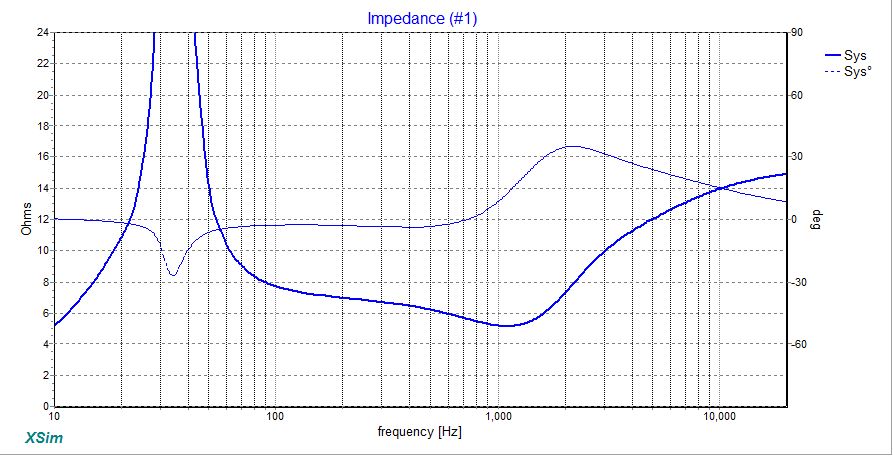
The answer is, it's pretty easy actually. The Accuton driver does have a very high peak. This simulation does not adequately simulate the cabinet effects, but if this peak remains, I would consider putting a 60 Ohm resistor across the inputs if driven by a tube amplifier. It will help keep that impedance peak normal. The minimum impedance (above 20 Hz) is 4.6 Ohms at around 1.2 kHz, not a place where amps usually have to huff and puff.

Conclusion

The MA30 kit has top quality parts everywhere. The makers are making money by bundling as a kit, but it's a pittance compared to what a branded, pre-built speaker would cost. The bass is going to be exactly what you expect from a small speaker. The MA30 will need reinforcement and a subwoofer to be close to full-range. However if you are good with that, you are going to have a very difficult time finding any speaker under $10,000 with these drivers and crossover components. If you listen to them and like them, get them, they are an absolute steal and a great start to a high end system, not to mention speaker building. The $300 crossover upgrade makes this an incomparable bargain.

Judge the value with your own ears but do not listen to them in haste. These speakers do not run to impress anybody. There is no fake modesty, blushing or seductive batting of the eyes in this design. Listen, breathe deeply and take your time to discover their sublime talents.

A Top Tier Alternative

For about the same amount of money, an alternative speaker kit is the Klang-Tong NADA design runs around $1,800 for parts plus $800 for cabinets from Taylor Speakers. Price and parts quality are comparable and both are available with pre-built crossovers. I personally prefer the ScanSpeak woofer to the Accuton, but I'm completely in love with the Mundorf AMT line, so I would say it's a bit of a toss-up. The Scanspeak will be warmer, and have more bass, it's also a much larger cabinet which is hard to tell from the images. Also, the dome tweeter has better dispersion.  Best for listening in well treated rooms, or when you need your stereo speakers to serve as background listening in addition to critical listening. If you need a full-range speaker and have the room for it then it's no contest. The NADA is  your top-tier speaker kit.

A Bargain Alternative

The MA30 and NADA  speakers are all expensive, and to many out of reach, so if you are looking for a well balanced speaker that costs under $500 / pair to build please consider the LM-1 speakers. They share a similar tonal balance to the MA30, but of course use much less expensive drivers, and can be built using off-the-shelf cabinets. 

Thursday, May 5, 2016

Fiio X5II and E12A - Mont Blanc Edition

The E12A headphone amplifier is specially marketed for the low impedance and low sensitivity of in ear monitors.  While usable with any portable device that uses a 3.5mm stereo jack, the special X5II stacking kit makes it a breeze to attach your X5II semi-permanently. The amp itself comes with a number of Livestrong-like bands that help attach it to most portable devices.

As noted elsewhere, the biggest failing of the X5II seems to be the built in headphone amplifier. If it was just weak across the board it would still be useful.  Unfortunately by itself it sounds hard and gutless. As if only a tweeter was playing.  This is a little bit of an exaggeration, but it helps illustrate the problem with sound quality. Neither of my headphones played nicely with it despite having a broad (20 and 60 Ohm) variation in impedance.

The E12A, like the K5, really opens up the sound. You get much more spacious and neutral sounding playback. Also, and one other reviewer mentioned this, the X5II seems to break in.  Yes, I know it's nuts, but if you absolutely can't stand it at first, put it in a drawer and let it play for 4-5 hours before you listen again, then tell me I'm nuts.

Anyway, with either add-on amplifier the X5II is a much much better sounding DAP. However, even at sales prices I'm now out $471  ($299 + $160 + $16) in total and I don't have the slim profile of the iPod classic, and I dare say the Tobleron shaped Pono may actually fit my pockets better.

Issues

Oddly, the dual SD cards in the X5II are seen as 2 separate cards by my Windows 7 PC and Media Monkey. To keep from going completely crazy I ended up moving all of my classical collection to SD 2, and keeping all the Pop, modern and world on SD1.  I guess that's fine, but in the 21st century it's surprising to find a digital device that doesn't take care of stuff like this for you.

Another issue is that each device charges independently.

Lastly, un-strapping the X5II to place in the K5 is kind of a bother. It seems you need to commit to using the X5 as either your commuter player, or your desktop player with easy to drive headphones. This combination is not going to be able to do all things for you. Not that any other solution would either.

Conclusion

Overall, the X5II/E12A is a much better sounding solution than the X5II alone. It's much clearer and warmer than my 160 GBbyte iPod classic (currently snuggled into the glove box of my car) but it's still not as good as the $399 Pono. The Pono still sounds warmer and sweeter without any loss of detail, but the X5II/E12A is a really good combination and credible good sounding alternative.

Wednesday, May 4, 2016

Headphone Impedance

We often see speaker impedance charts from reviews, but rarely do we see them in headphones, so I thought it might be fun to do so for my two reference headphones.

One nice exception are reviews from InnerFideility which do include this information.  Why should we care about headphone impedance? The lower the impedance at a given frequency, the more current an amplifier must provide. Portable headphone amplifiers are especially limited in current drive. This causes the sound to track the impedance curve instead of the music. So, in general, a headphone with a higher impedance and low phase angle will be easier to drive to the same high quality sound. They will tend to sound more consistent across different headphone amplifiers.


To do this I used my trusted Dayton Audio Test System v. 2. Of course most use this for speaker testing, but what are headphones but speakers you can wear?

I have two completely different headphones I have been using as my standards. They're probably now considered quite old.  The headphones I turn to most often are the AKG K712.

The impedance plot was a solid 60 Ohms or more.


My other set of references are Shure E4c in ear monitors. I'm not even sure they used that term when I purchased them. They are definitely the most "discerning" or "demanding" of the two. While they have fantastic noise isolation, the bass doesn't open up except with the best headphone amps.  All others need not bother. This should not be a good thing! What buyers really should look for are headphones that play great with cheap amps. The minimum impedance here is a punishing (for portable amps) 24 Ohms.


The only portable player so far that I have heard play this very well is the Pono. I just wish the Pono had more features that would make it a no brainer.  The amplifier part of the player is just simply outstanding. I need to get either easier IEM's or bite the bullet and get a Pono. The other sub-$1k player that played these well was the UFO DSD DAC, until it died. 

Sunday, May 1, 2016

Affordable Headphone Solutions From Pono, Fiio, Oppo and others

I have been in the market for a headphone listening solution for a couple of years. I'm not quite sure what it is exactly, but my thoughts were something like a portable player and/or headphone amplifier/DAC.  This all started since the Apple iPod Classic was discontinued and I got a great deal on an AKG K712. I still have the iPod, but it's married to my car which is iPod only. The iPod Classic sounds fine, but not the best I've heard, and it's limited and fixed storage size has been an issue.

In the mean time my search for solutions continues. 

So, what IS ideal?  That varies from person to person, but they are, from most important:
  • Sounds great
  • $500 or less. 
  • Battery operated (i.e. portable)
  • Supports 128 GBytes or more
  • Support for Tidal music streaming
  • Nice if it can double as desktop DAC/amp
I've also been struck by how completely off some reviews have been compared to my ears. They tend to be universally positive with colorful and nuanced critiques regardless of the source. I really have to wonder about the reviewers. In any event, I present my own list:


Pono PMPOppo HA-1Fiio X5IIFiio X7EchoBox ExplorerUFO
TypeDAPUSB DAC/AmpDAP/UsbDAP/UsbDAPUSB DAC/Amp
Approx. Cost$399$1,200$299$650$449$430
PortableYesNoYesYesYesNo
Maximum Storage192N/A2561921 Micro SD Slot??N/A
Sound QualityExcellentSadisticSadistic-ish??????Very very good
Wi Fi TidalNoN/ANoYesYesN/A
DACESSESSBurr BrownESSBurr Brown???


Pono

As I have written before, the sound of the Pono Portable Music Player, regardless of headphones, is always excellent, musical and enjoyable. It handled both my AKG and Shure IEM's so convincingly and smoothly that is has been my reference standard for what a portable Digital Audio Player (DAP) should be. However it is hampered by a few things which have kept me from pulling the plug on one for myself: Size, features and storage.

The size is too chunky, the apps are non-existant and storage is limited to about 192 GBytes. There's no way to stream music from a NAS or online service.  If it had BluTooth connectivity (and BluTooth could do high resolution music) so I can play from my phone it would be hands down unbeatable.

UFO DSD DAC

I purchased a UFO DSD DAC from Blue Coast Records at a show and it worked for about 2 months before it died from what I believe were power supply  and overheating issues. Among the USB DAC's I've listened to under $1,000 the sound quality was simply outstanding, and almost as good as the Pono player. If mine had not died so quickly it would be an easy recommendation.  If you buy, make sure it's from a reputable vendor (such as Blue Coast Records) and save your receipt.  In a sense, it IS portable in that it can be driven from the USB out of a phone or tablet, which works surprisingly well given the limited power a phone could supply but it is far too chunky for a pocket.


Oppo HA-1

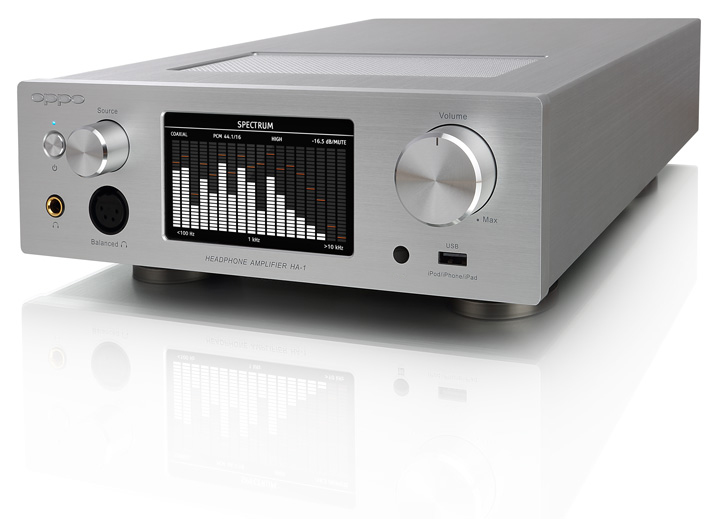
This is a beautiful looking headphone amplifier and DAC from Oppo that I really wanted to like. The Oppo 103 BluRay player with it's 7.1 analog outputs makes my home theater life so simple and beautiful and easy to integrate with my music listening that I could not be happier or conceive of buying another brand of BluRay player, ever.

Then I come to this "thing" released by Oppo as the HA-1. Are they serious, or just being cynical? I can't tell really. What a hard, strident and difficult to listen to treble and limp sounding bass. I heard it at the 2015 California Audio Show, the same show where I heard the UFO DSD DAC, driven by a Macbook Air. It was literally the worst sound at the entire show, of any kind, and I heard some really bad rooms and bad music at that show. I thought perhaps it was me but I mentioned this to a fellow audiophile who owned one for about two months who described it as "fingernails on a chalkboard." It's a real shame because it's beefy, sexy and comes from a company I really appreciate for it's high quality products and connection to consumers. Perhaps it performs much better with their own headphones? I never found out. For about a third of the price, the UFO DSD DAC easily sounds better and takes up less space.

Fiio X5II (2nd Generation)

The Fiio X5II is an extremely well reviewed player that is now in it's second generation, as well as heavily discounted from it's original $500 to around $300. With the glowing and numerous consumer reviews, and Fiio, like Oppo, showing very good customer engagement, I was certain this would be a good player for my commute. Unfortunately, cold and alone it's barely listenable. The treble is such an ear drill it literally makes them feel hot after twenty to thirty minutes of listening. It's like when you've been out in the sun too long and your eyes ache? Imagine that in my ears. It's not hyperbole, it's exactly what it feels like. By itself I really can't recommend this player. The closest experience I've had to this is the Oppo HD-1, or speakers from Triangle.  Ouch. Not all is lost however for with an outboard amplifier this is a very good source.


Fiio X5II/K5 Combination

As an article at EnjoyTheMusic points out that the Fiio K5 headphone amplifier really improved the sound of the X7.  I have not heard the X7 at all, but It seems from my listening to the X5II/K5 combination that the K5 does in fact improve the sound quality of the player. Using the K5 the listening experience is much more balanced. The midrange and bass are no longer shy, the treble softens up, channel separation (or something like it) gets really good. Thanks to the K5 I'm not as ready to throw in the towel than if I had purchased the X5II by itself. Also, while I usually review with the AKG K712 my outdoor headphones are Shure in-ear-monitors, so I need to give them a good long listen in the streets to see if that is a reasonable arrangement.

I have also recently reviewed the Fiio E12A Mont Blanc Edition portable amplifier, which also does an admirable job of driving difficult headphones from the X5II.  If you are only looking for a portable solution, that may be your dream ticket. 


EchoBox Explorer

The $449 Explorer is an indy Android / Wifi DAP in a dapper looking whiskey flask design. It will constantly remind you to drink, so probably not good for those dealing with addiction issues, and what audiophile isn't? Still, it looks promising at a reasonable price. Like the X7, it aims to be an Android answer to the iPod Touch challenge. For those not familiar with the iPod Touch, they are essentially iPhones without calling abilities and as a result can run the full suite of iOS apps that don't require calling. To my knowledge only the X7 and Explorer are reasonably good Android equivalents.

Sadly I've never seen one in real life so cannot comment except to say they look very interesting!

Lessons Learned


I. The resolution of the playback files is much less important than the sound of the player.
 I'm not saying crappy MP3 files sound as good as everything else.  What I am saying is that the sound quality and balance of the player is a much bigger factor to my enjoyment of the music than the file resolution. This may not be true in my home system, but  it is here. I would much rather have the Pono sound at 44.1kHz/16 bit FLAC than the Oppo at any file quality.

II. Online audio reviews, even when apparently independent, are often completely off the mark.

III. DAC chip makers don't matter as much as the amplifiers.
Some audiophiles ascribe to the idea that DAC chips from manufacturer X are always better than Y, but putting together this report and going over my past experiences I can't agree with that at all. I've listened to ESS and Burr Brown devices and have found great and bad examples of both. My current and previous home DAC's had Burr Brown chips in them. The Pono uses an ESS chip.  The X5 uses Burr Brown. The Oppo 103 uses Cirrus Logic. There's no correlation in my experience that either chip is inherently better or worse.

I'll write more on this as I gain more experience. As always, please for the sake of the Dark Goddess of Coffee and Chocolate I worship, use your own ears to spend your own money. Buy what you like, always.

Wednesday, April 20, 2016

Focal Beryllium Tweeter Upgrade

Good news for all of you Focal owners out there! If you own a Focal Profile or Chorus from the late 90's you may be able to easily upgrade the tweeter to the latest Beryllium tweeter from ScanSpeak for a parts cost starting around $300 per speaker. 

Update:
I have a new campaign to bring this upgrade to the Focal Mezzo Utopia! Stay tuned here.


Background

The Focal Profile and Chorus line shared a design that mounted the tweeter on an L shaped bracket at the top.  It's fairly easy to remove it and then route a slightly larger hole for the ScanSpeak tweeter to replace it.

Unfortunately I only have really good measurements from the Focal Profile 918 speakers so I can only offer you exact advice on the crossover modifications needed for them.  However given how much Focal likes to re-use ideas and designs it's quite likely you can use most of this other Profile as well as the Chorus range of speakers as well.If you have speakers besides the Profile 918's you may need to take some measurements to select the correct crossover parts.
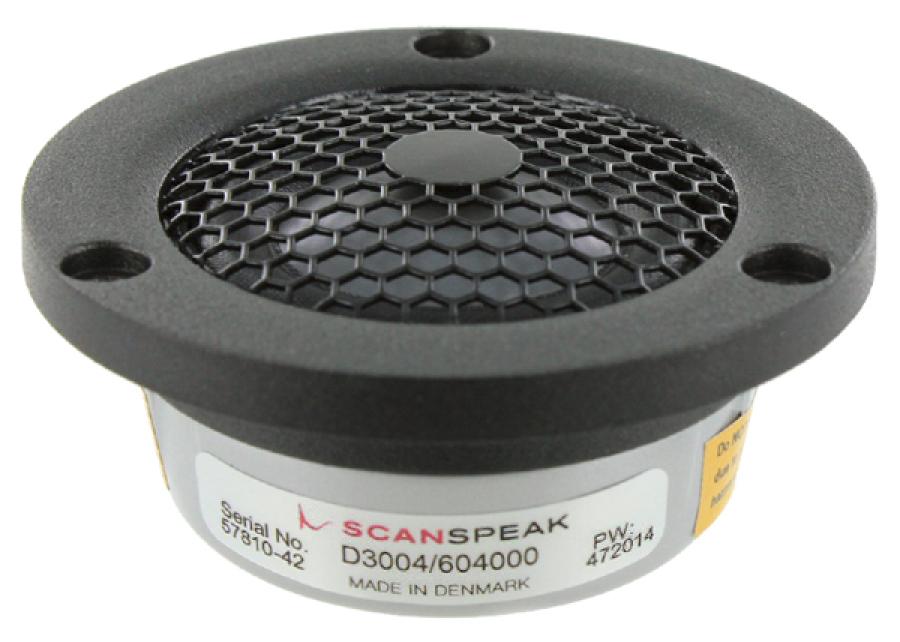
After a long search and then analysis I have found that the ScanSpeak Illuminator D3004/6040-00 is a pretty good physical, acoustical and electrical upgrade tweeter for all of the Focal Profile speakers and a relative bargain at $270 each.  Since the Focal tweeters are all severely under-damped, we are using the less damped of the two low-profile ScanSpeak Illuminator tweeters we could choose from. If you use this tweeter's larger sibling the 6040-10 the crossover parts will not work and you won't gain much in this application except a more difficult crossover design.

Sadly I no longer own the Focal Profile 918's.  I wish I did because if I had thought a little more about it I would have done this upgrade instead of all the others. Except pulling out the bass caps, which is still a good thing to do (see previous posting).

The chart shows the frequency response of a Focal Profile 918 before (red) and after (blue) the modifications. The raggedness you see in the Focal Profile tweeters is common to almost all Focal tweeters since they sharing a similar underlying motor structure. Tweaks to the back of the tweeter have been done in the Sopra line to unknown benefit. The infinite horn loading used in the Sopra is an idea Focal may have borrowed from Wilson Audio Specialties who did some work on improving the tweeter chamber in the previous speaker line, or from B&W's Nautilus. Sadly, the measured improvements seem modest and fail to overcome the shortcomings of the motor/dome combination in my opinion. 

Focal Profile, original vs. Be Tweeter
Using the ScanSpeak Be tweeter results in an unbelievably flat and smooth frequency response, and is not shamed by any mid-range Focal ever made. This sounds like the ravings of a madman until you realize one thing:


Focal Aria 936
ScanSpeak tweeters have a much better motor structures than Focal uses in their mid-range speakers, and possibly even the Utopia's as well.

Focal's tweeter motors have improved since the Profile range and as a result the Aria range has a much smoother treble than the Profile could achieve, as you can see in this chart from the Stereophile review of the Focal Aria 936, but in the end it is still pretty ragged. 
This upgrade is designed with two requirements:

  • The tweeter will be flush mounted to the face of the baffle.
  • The tweeter will be used without the grill cloth. 

The Profile range required the grill to extend the tweeter range at the expense of the overall smoothness of the response.  The superior construction and motor used by ScanSpeak makes those requirements unnecessary and the grill will actually be in the way. Chorus owners could probably go either way. However I have found the rickety plastic used tends to vibrate and create secondary sound sources.  The speakers are really much better off without the grills after this upgrade.

Modifications Required

You will need to make some simple part replacements to the crossover, and you will need to expand the tweeter hole by a few millimeters to fit the larger tweeter motor. The original tweeter and bracket won't be re-used. 

Tools

To make the modifications you'll need:

  • Plunge router
  • Circle cutting jig
  • 1/4" Spiral upcut bit (as recommended by jig make)
  • High power, preferably temperature controlled soldering iron with wide tips 
  • 3/4" wooden scraps. 
  • Long handled phillips head screwdriver to pull out crossover
  • Torx T25 to pull out midrange and woofer.  
  • Drill with 1/8" drill bit for tweeter pilot holes.
You really need the router and jig for this project. In addition to enlarging the hole you'll need to route a recess for the tweeter flange. It's not something you should freehand if you have any dreams of impressing your friends with your modifications.

Parts

A full schematic is provided below, this is just for reference:

Crossover Changes

The original tweeter filter, top left, uses a single resistor followed by a fourth order crossover. This will make these changes a breeze to make on the original circuit board since we are in fact removing parts. Note that the schematic part names don't correspond to the circuit board. You'll have to examine the traces yourself to be sure of what's what. Also notice that in the original design the tweeter polarity has to be inverted for the better phase matching.  Actually the original Profile 918's phase matching is rather crappy in either polarity. It's just slightly better inverted.


Here's a picture of the original crossover board from a previous blog entry. The resistor and caps you are interested in are in rectangles. The two inductors that you'll need to remove are the air core (i.e. donut) shaped coils at the bottom of the picture.

You'll replace the "Tweeter Resistor" with a new one. Discard both of the tweeter caps and place the replacement 10uF cap so it jumpers around both of them (C4 and C5 in the schematic).

Remove both of the donut-like coils.  Replace the last one with the new 0.27mH coil and you are done!


Here's the revised schematic.  The important part is on the top.  The new high pass filter is much simpler than the original due to better physical matching.  The end result is good, but not excellent, phase matching. It's certainly much better than in the original Profile, but could be improved upon with many more parts which I think are not worth it.

Also note that the ScanSpeak Be tweeter is in phase with the midrange.

There's nothing wrong Focal inverting the tweeter to improve phase matching. Given the location of the tweeter and overall crossover design, Focal's best choice was to invert the tweeter, but it did not end with idela phase matching except at the crossover point. I suspect part of the problems Focal's designers had was with the demands of matching the original tweeter to the woofer. It was a much bigger challenge than we have.

As noted in another posting, another quick mod  you can make is to eliminate C2. It's a waste of amplifier power.

Tweeter Mounting

Flush mounting the tweeter is the hardest part. What I may recommend is that you create a jig to help you use a router jig.  Use a scrap of wood about 6" by 2" and in the center add a wooden disk about the same radius and depth as the existing tweeter hole. The Focal tweeters are terribly small, around 36mm, but the replacement is only about 12 mm larger. You can make the disk using the same jig which you need to route the tweeter flange and cavity. Use hot glue to attach the wooden jig to the inside of the speaker cabinet so that the disk fills in the original tweeter hole. The disk does NOT have to be a tight fit. Just so long as you can eyeball it and have even clearance all around before the hot glue sets.


Caution!

Before routing anything on the speaker baffle double check that the new tweeter will have plenty of clearance after routing! Don't forget to check that you have internal clearance as well! You are going to be routing very close to the top panel. Make sure after routing that the body of the tweeter won't be blocked by the top cabinet panel. This will vary greatly by model.

If In doubt, put the new center 25mm below the top of the original hole. That should ensure you have the same clearance to the top as the original tweeters.   On the Focal Profile 918, this is going to be about 6mm below the original center, give or take.

Once you are sure of the center location for the new tweeter, route the flange and then the main hole.  Hopefully you can then pop off the strip of wood and reuse it for the next speaker.

Be sure to drill pilot holes before attaching the screws.  The MDF Focal uses is pretty soft. Attach with 3 Cap head screws per tweeter.

You may need to attach new quick-disconnects to the leads from the crossover to ensure proper polarity and sizing.  If the sizes are right, but polarity is wrong you can also switch the cables at the crossover end.

Tweeter Tweak

Add your favorite color of Pressure Sensitive Adhesive (PSA) backed felt around the tweeter and all the way to the edges. It will really help increase the sense of spaciousness and smoothness. There's a reason why Wilson and Vandersteen use this approach, it works.  Fortunately for us you don't have to do much to reap the rewards.  A couple of $1 felt sheets from your craft store will do great things.

Capacitors

It's really easy to go crazy with capacitors. My recommendation on the cheap but worthy side is a 10uF Mundorf MKP bypassed by an Audyn 0.1uF TrueCopper capacitor. That should be around $30/speaker. On the high end I suggest the Jupiter Copper Foil capacitor by itself for $399 at Sonicraft.

Somewhere in the middle of the range are the ginormously sized Clarity MR caps.  I strongly suggest you use multiple caps here though, it has slightly high ESR. It's a great cap, but you are better off with a pair of 4.7uF and adding an 0.68uF cap than buying the 10uF cap by itself. You could save a little money with the single 10uF cap, and maybe some sspace too but then I strongly suggest the Audyn 0.1uF TrueCopper bypass or Jupiter Copper as bypass caps.

What about the high-end Mundorfs?  Sure, you can go that route, but I find they add a Disneyland-like sheen to the music that draws my attention away. If on the other hand you find it magically enchanting, that's the way you should go. That approach certainly works for Magico and their fans, so you have plenty of good company. The Mundorf EVO Silver in Oil are among the best exemplars of this. I'm not really criticizing you at all. Just letting you know what the differences are. I find the Mundorf MKP under-appreciated and more musically honest. However buy what you like, damnit, and don't let my personal ideals get in the way of your good time.


Inductor

The inductor recommended here is a high-value but very good air coil core from Jantzen which runs $6 each, but you may also want to try the copper foil version, also from Jantzen for around $18 each.  Either way Jantzen makes very very good inductors. Given a choice though, the midrange coil is a much better upgrade to make to copper foil. The combination of new tweeter and midrange coil will enhance the overall velvety smoothness of the response. Make sure your coil axis are at right angles to any nearby coils.

Resistor

I always recommend Mills for being fabulously accurate, transparent, low noise and virtually immune to changes due to temperature.

What's Next?

If you want to really take your speaker to the next level, I'd suggest returning to the older post and doing the major woofer mods at the bottom. Increasing the minimum impedance of these speakers will make most amplifiers sing for joy. You'll gain dynamic range and bass depth that will embarrass any other Focal's short of the EM woofer Utopias.